


The Beauty of Natural Fibers and
Traditional Craftsmanship
▼ Table of Contents ▼
1. Neps
2. Slight Variations in Yarn Thickness
3. Naturally Undyed Fibers
4. How Color Appears Due to the Shibo Finish
5. Imperfect by Nature, Beautiful in Its Own Way
Since ancient times, people have used "Asa"—traditional plant fibers such as linen and ramie—to create clothing and many everyday necessities. In Japan, asa fibers have been cherished for more than 12,000 years.
In particular, garments made from ramie have long been valued for their cool and comfortable feel during Japan's hot and humid summers. They represent the wisdom of generations who sought ways to live comfortably with nature.

1095 Omi Chijimi Hon'asa (Pure Ramie) Samue No.94 Beige
At WASUIAN, we offer samue, jinbei, jackets, and long haori made from Omi Chijimi Hon'asa (Pure Ramie) fabric, which is known for its refreshing comfort. These garments are enjoyed not only for relaxing at home, but also for going out and for staying comfortable in air-conditioned spaces.
In this blog, we would like to introduce the unique characteristics and timeless appeal of Omi Chijimi Hon'asa (Pure Ramie) fabric based on a question we often receive from our customers.
Q. "There are some areas on my Omi Chijimi Hon'asa Samue that look different from the surrounding fabric. Is this a defect?"

A. Please rest assured.
This is a natural feature of ramie fabric, known as a "nep," which is one of the distinctive charms of Omi Chijimi.
Including neps, there are four characteristics below that are expressions reflecting the unique beauty created by nature itself.
01|Neps

Small clusters formed when fibers become intertwined are called neps.
The ramie used in Omi Chijimi fabric is known for its crisp texture, soft feel against the skin, and quick-drying properties. Because ramie fibers naturally vary in length from about 2 to 25 centimeters (0.7 to 9.8 inches), creating perfectly uniform yarn is extremely difficult.
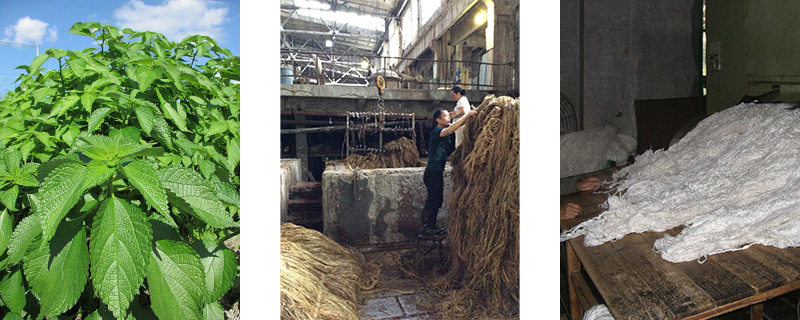
As a result, small neps may occasionally appear in the fabric.
These subtle variations are part of the rich texture and character that make traditional Japanese ramie fabric so special.
02|Slight Variations in Yarn Thickness
Omi Chijimi Hon'asa fabric is woven using fine ramie yarn. Because ramie is a plant-based fiber, naturally occurring elements within the fibers may occasionally create slight variations in yarn thickness.

These differences may be more noticeable in darker colors, where the way light reflects on the fabric can vary.
Ramie yarn is also delicate and may occasionally break during weaving. When this happens, skilled artisans carefully reconnect the threads with tiny *loom knots and continue weaving.
As a result, some areas may appear slightly lighter or resemble small gaps in the fabric.

These subtle details are a reflection of the craftsmanship behind Omi Chijimi.
* Loom knot | A knot used to join broken threads or new threads into a single strand, characterized by its extremely small size and resistance to coming undone. Originally, this knot was used to tie broken threads while weaving.
03|Naturally Undyed Fibers

Very occasionally, you may notice small whitish threads in Omi Chijimi Hon'asa (Pure Ramie) fabric. These are caused by immature ramie fibers that do not absorb dye easily.
Rather than using strong chemicals that could affect the natural texture of the fabric, we preserve the original qualities of the ramie. For this reason, small whitish areas may occasionally appear, especially in darker colors.
These natural variations are one of the characteristics of authentic ramie fabric.
04|How Color Appears Due to the Shibo Finish

One of the defining features of Omi Chijimi fabric is its textured surface, known as shibo. This texture helps keep the fabric from clinging to the skin and gives Omi Chijimi its cool and comfortable feel.
To create this texture, the woven fabric is gently worked by skilled artisans using specialized machinery. During this process, very fine fibers may occasionally rise on the surface, causing certain areas to appear slightly lighter.
This is another characteristic created by the traditional finishing methods unique to Omi Chijimi.
These characteristics do not affect the strength or durability of the fabric.
The expressions created by natural fibers are part of what makes Omi Chijimi so distinctive.
05|Imperfect by Nature, Beautiful in Its Own Way

1095 Omi Chijimi Hon'asa (Pure Ramie) Samue No.94 Beige
In addition to the characteristics introduced above, slight differences in color and texture may occasionally be found from one piece to another. These natural variations are part of the beauty of authentic ramie fabric. Each piece carries its own individuality.
By preserving the natural qualities of ramie while creating a comfortable feel against the skin, Omi Chijimi Hon'asa fabric offers both refreshing comfort and the rich texture unique to natural fibers.
We hope you will enjoy the cool comfort and timeless appeal of this traditional Japanese summer fabric.
Above all, we hope your garment becomes a treasured piece that you will enjoy for many years to come.
【Reference Site】
Japan Bast Fiber Association(日本麻紡績協会)
https://asabo.jp/museum/tradition/